29/06/2026 09:48 - Economia
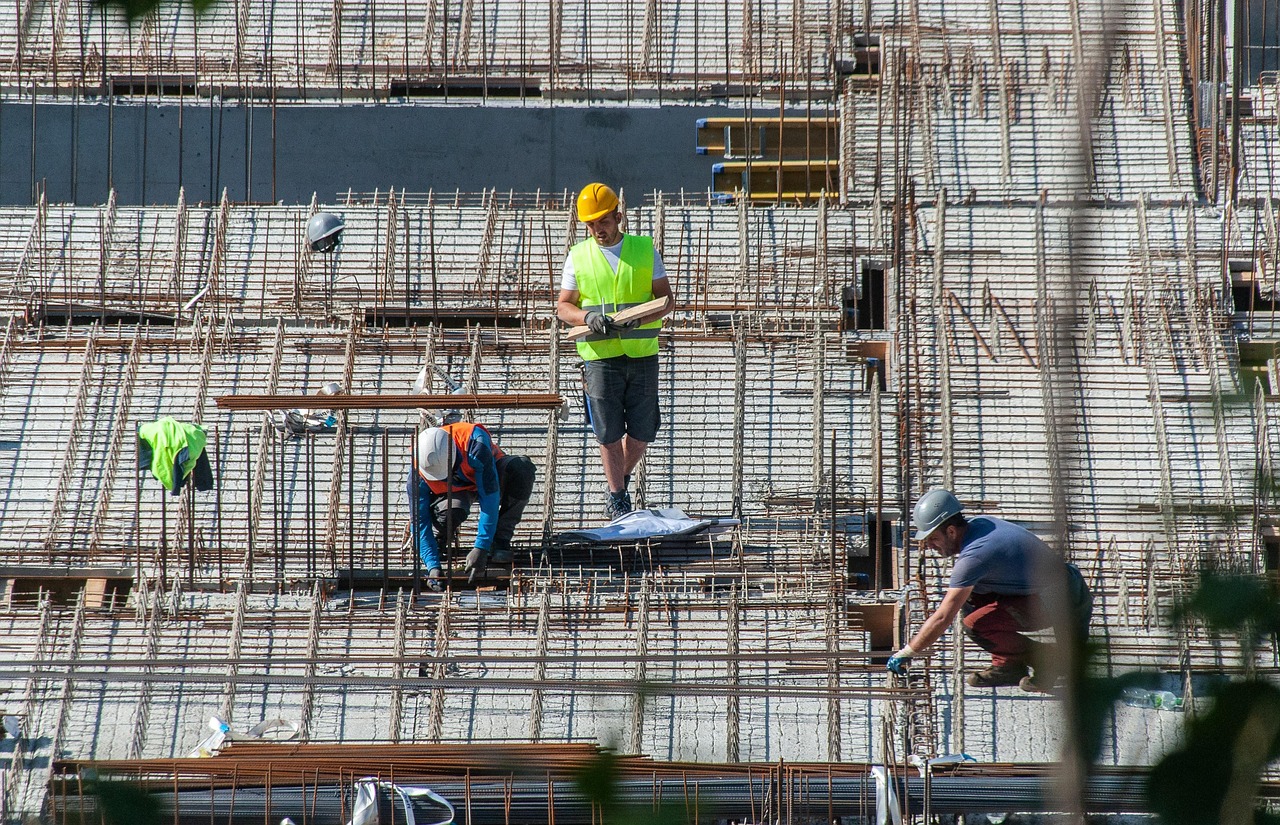
Construction costs in Argentina continue to show trends that concern developers and investors alike. According to the latest report from Apymeco (the Association of SME Construction Companies of Buenos Aires Province), the value per square meter reached $2,162,556.49 Argentine pesos during May, consolidating a monthly increase of 1.84% and an annual rise of 21.75%.
This data takes on special relevance in a context where the official exchange rate hovers around $1,479 pesos per US dollar and accumulated inflation in the first semester is approximately 16% according to economic consultancy projections. Construction, one of the regional economy's key drivers, reflects in its costs the tensions between materials, labor, and exchange rates.
For International Readers: Apymeco is Argentina's leading SME construction association, providing monthly cost benchmarks based on real development projects. Their reports are essential references for developers, investors, and financial institutions evaluating construction projects across the country.
The report highlights that materials were the main driver of the increase, with a monthly rise of 3.11% —the highest of the year. Labor, on the other hand, showed more moderate behavior, with an increase of 0.74%, despite new wage agreements and non-remunerative payments.
| Material | Monthly Change |
|---|---|
| Cement | +14.12% |
| Ready-mix Concrete | +8.10% |
| Ceramic Bricks | +5.00% |
| Paints | 0.00% |
| Sanitary Fixtures | 0.00% |
| Lime | 0.00% |
Source: Apymeco, May 2026
An interesting insight emerges when measuring costs in foreign currency. The square meter price went from USD 1,522.25 to USD 1,501, representing a decrease of 1.34%. This decline responds to the stability of the official exchange rate, allowing costs in dollars to remain competitive for international investors.
The exchange rate used for this calculation is the official rate provided by Argentina's Central Bank on the 10th of each month.
Apymeco uses a reference model: a multi-family building of 1,948.02 m² developed across ground floor and nine stories, located in zone U/C 1 of La Plata (the capital of Buenos Aires Province). This building includes 12 parking spaces, one superintendent's dwelling, and 27 one-bedroom functional units. The study breaks down the cost structure as follows:
Note: U/C 1 is an urban zoning classification in La Plata that permits medium to high-density residential development, making it ideal for benchmark construction cost studies.
| Component | Share |
|---|---|
| Materials | 39.51% |
| Labor | 27.84% |
| Third-party Provisions | 11.64% |
| Cost-to-cost (subtotal) | 78.99% |
| General Expenses | 4.80% |
| Construction Company Profit | 10.89% |
When breaking down specific categories, reinforced concrete structure remains the most significant expenditure, representing 24.00% of the total budget. Following are:
These percentages allow developers and investors to anticipate where the largest investments are concentrated and plan accordingly.
Cement dispatch —a key indicator of activity level— registered an improvement of 10.4% compared to the previous month. However, it still remains 1.5% below the same period of the previous year, indicating a gradual but incomplete sector recovery.
For the local real estate market, the Apymeco report is an essential tool. The direct construction cost does not include VAT, land value, administrative expenses, professional fees, or developer profitability —factors that significantly increase the final cost of any development—.
2026 Accumulated: Construction costs have risen 8.41% in the first semester.
Year-over-year comparison: The increase compared to May of the previous year was 21.75%, below the projected general inflation of 29% for 2026.
Official dollar rate: $1,479 pesos in June, with reserve accumulation at the Central Bank reaching USD 11 billion.
Source: BBVA Research, BCRA
The decline in costs measured in US dollars —combined with exchange rate stability— opens opportunities for those planning to invest in Argentine real estate. The increase in local currency reflects domestic inflation, but competitiveness in foreign currency keeps the real estate market attractive for international capital. With construction costs in dollars falling while materials like cement and concrete see double-digit percentage increases in peso terms, foreign investors can find favorable conditions for development projects in Argentina.
Sources: Informe Construcción | El Día | Apymeco

Alfredo S. Quiroga