29/06/2026 22:03 - Economia
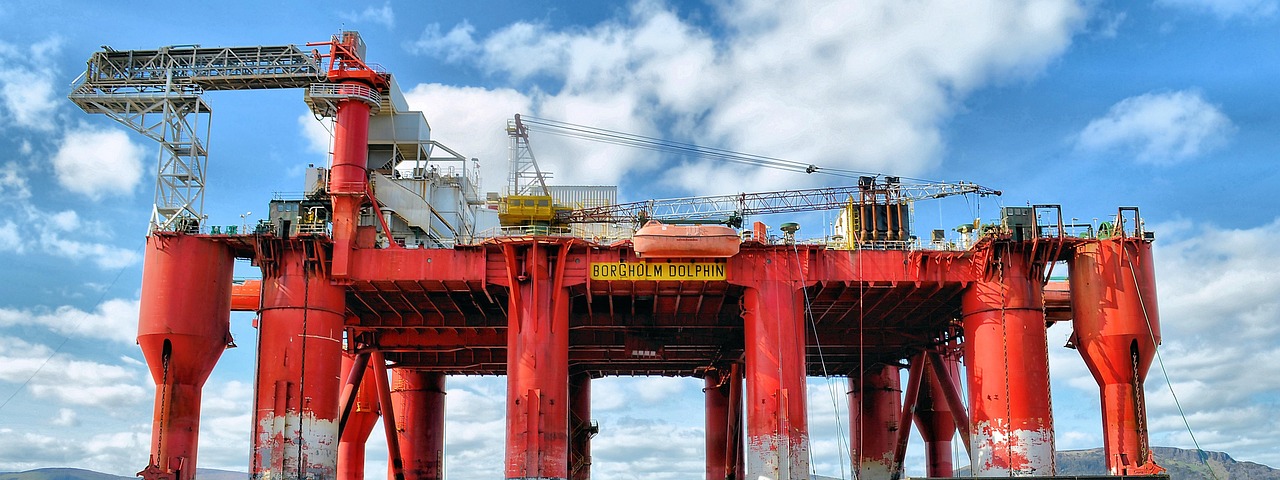
International oil companies operating in Argentina transferred US$580 million abroad between December 2025 and April 2026, taking advantage of a new government policy that eases currency restrictions. This figure represents the largest share of a total US$1.543 billion in profit and dividend transfers across all sectors during this period.
For our international readers: Vaca Muerta ("Dead Cow" in Spanish) is one of the world's largest shale oil and gas reserves, located in Neuquén Province, northern Patagonia. Often compared to the Permian Basin in the United States, it covers approximately 30,000 square kilometers and holds estimated recoverable resources of 16 billion barrels of oil equivalent. This geological formation has become Argentina's flagship energy project and a magnet for foreign investment.
Argentina's Central Bank (BCRA, by its Spanish acronym) issued Communication A 8226 on April 11, 2025, effective from April 14, 2025. This regulation allows financial institutions to grant access to the foreign exchange market for companies to transfer profits and dividends abroad, corresponding to earnings realized in annual financial statements for fiscal years beginning on or after January 1, 2025.
This measure marked the end of currency restrictions that had been in place since 2019, enabling multinational corporations to repatriate profits generated in Argentina without the limitations imposed by the previous administration.
The Régimen de Incentivo a las Grandes Inversiones (RIGI) or "Large Investment Incentive Regime" is a special legal framework created by the Argentine government to attract major foreign investments. It provides tax benefits, regulatory stability guarantees, and favorable currency exchange conditions for companies committing to large-scale projects in Argentina. Think of it as Argentina's version of special economic zones or investment promotion programs seen in countries like Chile, Colombia, or Ireland.
| Benefit | Condition |
|---|---|
| Income Tax reduction to 25% | For projects enrolled in the regime |
| Total exemption from export duties | After 3 years of enrollment |
| Free availability of 100% of foreign currency from exports | After the 3rd or 4th year of operation |
| Guaranteed regulatory stability | For 30 years |
Planned investment associated with the RIGI ranges between US$55 billion and US$60 billion, according to industry data. Projects like YPF LLL Oil reach US$25 billion, while Chevron projects investments exceeding US$10 billion.
Brent crude oil prices retreated from a high of US$138 in April 2026 to approximately US$80 in June of the same year. Wood Mackenzie projections estimate an average of US$92/barrel for 2026 and US$78/barrel for 2027.
The RIGI reduces the breakeven point for Vaca Muerta projects: from US$51/b to US$48/b for individual wells, and from US$61/b to US$57/b for complete projects, making investments more attractive even in lower price scenarios.
The Argentine government presents this capital flow as a "signal of predictability" for international investors. The RIGI framework aims to attract large-scale investments by guaranteeing stable conditions over the long term.
Critics argue that the current model promotes an "enclave" style activity: resources are extracted using imported technology (also benefiting from 0% tariffs under RIGI), and financial returns are exported rather than reinvested in the country's industrial development.
The deadline for companies to apply for the RIGI is July 2027, with a minimum investment threshold for onshore production of US$600 million.
Source: Boca de Pozo | Publication date: June 23, 2026

Alfredo S. Quiroga