30/06/2026 04:21 - Tecnologia
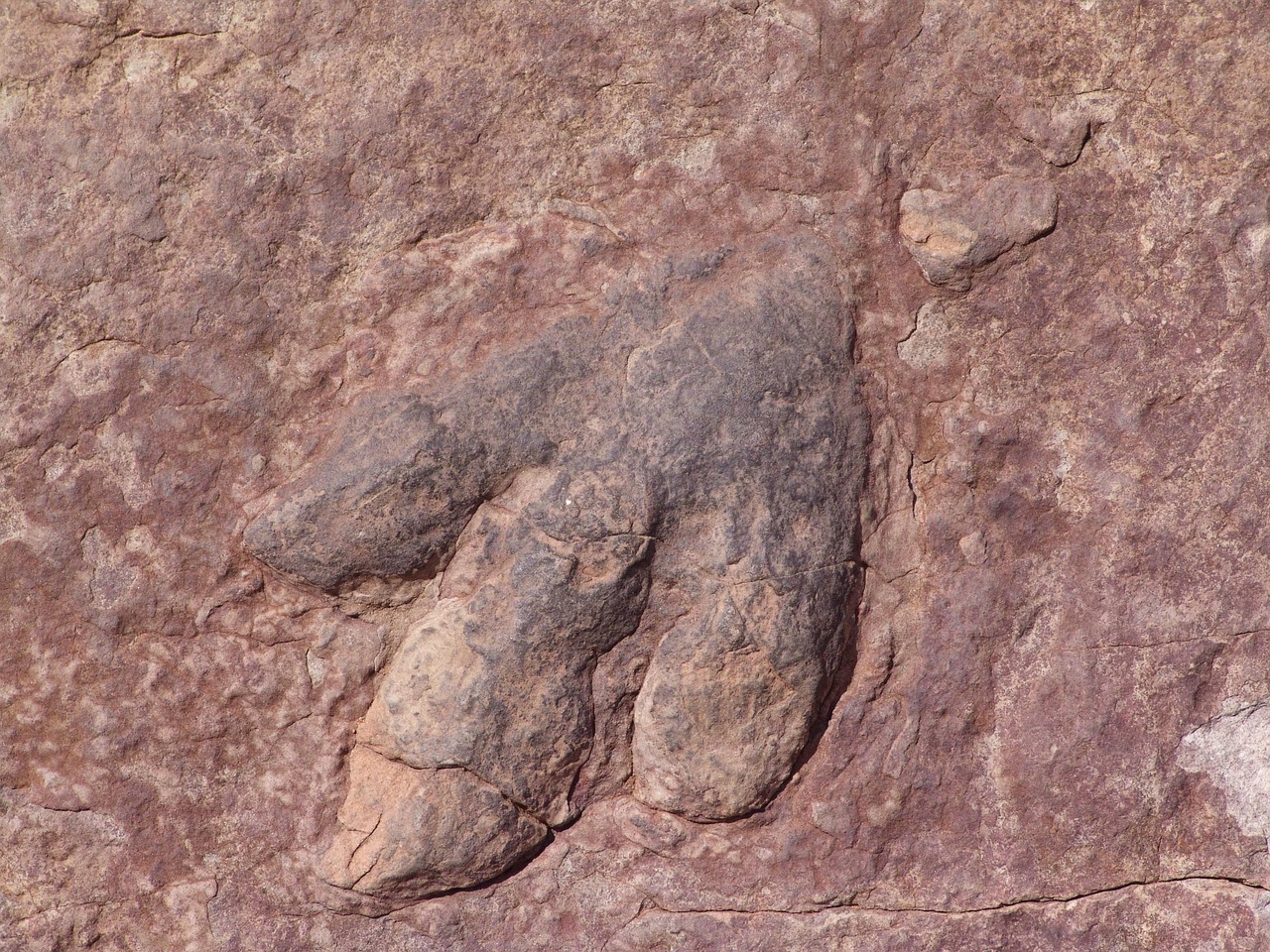
A fossil forgotten for four decades in the archives of the British Antarctic Survey (BAS) has been identified as the first dinosaur bone ever found in Antarctica. The specimen, a caudal vertebra from a titanosaur, was collected in 1985 on James Ross Island, but the team that found it couldn't determine its origin and filed it away as a possible marine reptile.
The rediscovery occurred when Mark Evans, collections manager at the center, reviewed material stored for years in Cambridge. Evans noticed distinctive features that led him to consult Professor Paul Barrett from the Natural History Museum, who confirmed the specimen's identity.
Titanosaurs were a group of herbivorous sauropod dinosaurs that included some of the largest land animals in history. Their main characteristics include:
More than 100 titanosaur species have been identified worldwide, distributed across all continents during the Cretaceous period.
The finding allows scientists to reconstruct what Antarctica was like millions of years ago, when it wasn't covered in ice:
| Climate: | Tropical to warm temperate |
| Vegetation: | Dense forests and tropical rainforests |
| Fauna: | Land dinosaurs and marine reptiles |
| Location: | Part of the supercontinent Gondwana |
Antarctica was part of Gondwana along with South America, Africa, India, Australia, and Madagascar, allowing species migration between continents.
Geologist Mike Thomson documented the find in his field notebook dated December 9, 1985. Along with a small sketch, he noted: "large reptile vertebra", specifying it measured about 10 centimeters wide.
Evans believes the collection team initially interpreted the piece as belonging to a marine reptile, which explains why the fossil remained without definitive analysis for so many decades.
"Sometimes, when you start wondering 'what's in this drawer,' you come across something and think: 'Ah, this looks interesting.'"
Paul Barrett, professor at the Natural History Museum, verified the identification after examining the piece:
"Although it doesn't look very striking at first glance, it has a really distinctive shape. As soon as I saw it, I knew what we were dealing with... I was totally sure it was a titanosaur. It's a totally unique combination of characteristics in this type of dinosaur."
The vertebra's morphology confirmed it didn't belong to another reptile, but to a member of the most successful sauropod lineage of the Cretaceous period.
This discovery demonstrates the importance of systematically reviewing stored collections in museums and scientific institutions. Thousands of specimens collected in Antarctic expeditions over decades remain unclassified, awaiting future discoveries.
James Ross Island, where the vertebra was found, remains one of the key points of Antarctic paleontology, with numerous findings that continue revealing the biological past of the white continent. For context, this island is located on the Antarctic Peninsula, the northernmost part of Antarctica, making it one of the most accessible areas for scientific research.
Sources: British Antarctic Survey (BAS), Natural History Museum, BBC. The study was disseminated on June 29, 2025.

Alfredo S. Quiroga