14/06/2026 22:05 - Tecnologia
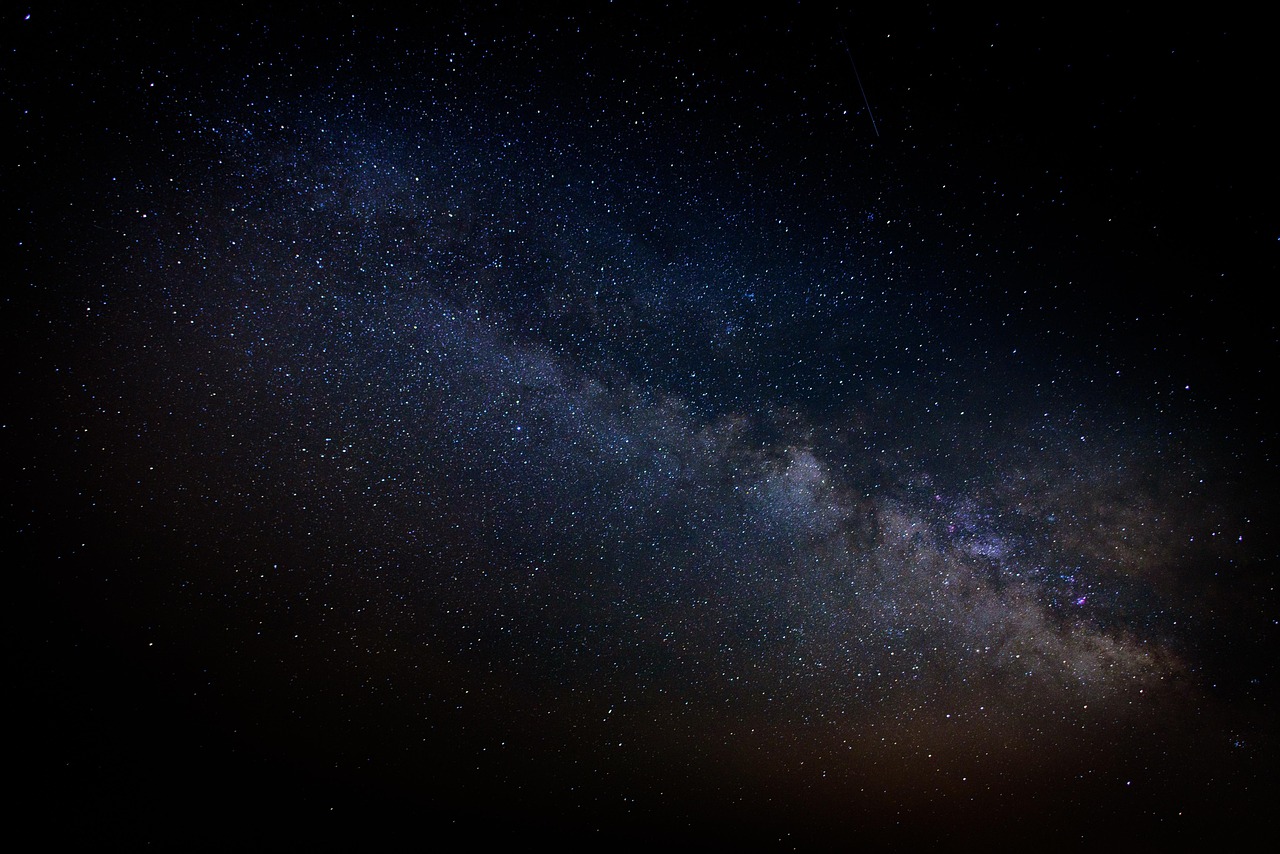
Radiotelescopio MeerKAT con múltiples antenas blancas en el desierto del Karoo de Sudáfrica bajo un cielo estrellado, con ondas de radio visuales en tonos azules representando la detección de señales cósmicas distantes
An international team of scientists has confirmed the detection of a hydroxyl gigamaser situated more than 8 billion light-years from Earth, establishing a new observation record for the early universe. The signal, captured by the MeerKAT radio telescope located in South Africa's Karoo desert, traveled for billions of years before reaching our instruments.
Most remarkably, the detection was achieved in just five hours of observation, when similar discoveries typically require hundreds of hours of astronomical work. This finding opens a new window to explore hidden chapters of cosmic history.
Cosmic masers have been known to astronomers for decades, but gigamasers represent a much more extreme version. While a megamaser can be millions of times brighter than a conventional maser, a gigamaser reaches luminosities thousands of times higher than even those extraordinary figures.
The term may remind you of a laser, with a fundamental difference: instead of emitting visible light, gigamasers generate intense emissions in radio frequencies.
Hydroxyl (OH) is a molecule composed of one oxygen and one hydrogen atom. In these cosmic environments, hydroxyl molecules act like natural amplifiers, boosting radio waves to incredible intensities that can travel across billions of light-years.
The signal detected by MeerKAT comes from a galaxy in the midst of a cosmic collision. When scientists analyze this signal, they're not seeing the galaxy as it is now, but as it existed 8 billion years ago, when the universe was less than half its current age of approximately 13.8 billion years.
During that era, galaxies were much more turbulent than today. Galactic collisions were frequent and star formation rates reached extraordinary levels.
The observed galaxy appears amplified by a phenomenon known as gravitational lensing. A galaxy situated between the original source and Earth acts as a gigantic cosmic magnifying glass, bending the path of light and artificially increasing the brightness of the distant object. Without this natural amplification, detection would have been much more difficult.
Albert Einstein predicted this effect in his theory of General Relativity. Massive objects warp the fabric of space-time, causing light to bend around them like water flowing around a rock in a stream.
The MeerKAT radio telescope is one of the most advanced scientific infrastructures on the planet, with exceptional sensitivity to detect extremely weak signals from very distant regions of the cosmos.
The Karoo desert, where MeerKAT is located, is one of the best places on Earth for radio astronomy. The dry climate, remote location, and protected radio-quiet zone make it ideal for detecting faint cosmic signals without interference from human-made radio waves.
Its ability to cover wide frequency ranges allows searching for multiple astronomical phenomena simultaneously. The researchers were studying neutral hydrogen, one of the fundamental components of the universe, when they identified the gigamaser signal in the same data.
Although this is a single detection, the implications could be enormous. Hydroxyl gigamasers typically appear in merging galaxies, some of the most important events in galactic evolution.
When two galaxies collide, not only do their stars and gas clouds mix. The supermassive black holes located at their centers can also gradually approach each other. That process generates gravitational waves, small ripples in space-time that constitute one of the most exciting fields in modern physics.
The speed of the finding suggests that thousands of similar objects could be waiting to be discovered. What until now seemed exceptional could become a common tool for investigating the early universe.
The international SKA (Square Kilometre Array) observatory is set to become the largest and most sensitive radio telescope ever built, complemented by the future American ngVLA (Next Generation Very Large Array).
This signal represents much more than a distance record. It is a key beginning to open a door closed since the origins of the cosmos. The detection demonstrates that humanity already possesses the necessary technological capacity to listen to some of the universe's oldest whispers. Each new observation expands the map of our cosmic history and brings us closer to understanding how galaxies emerged, how black holes grew, and how primitive chaos shaped the sky we contemplate every night.

Alfredo S. Quiroga
Conspiraciones