


28/07/2026 22:55 - Internacionales
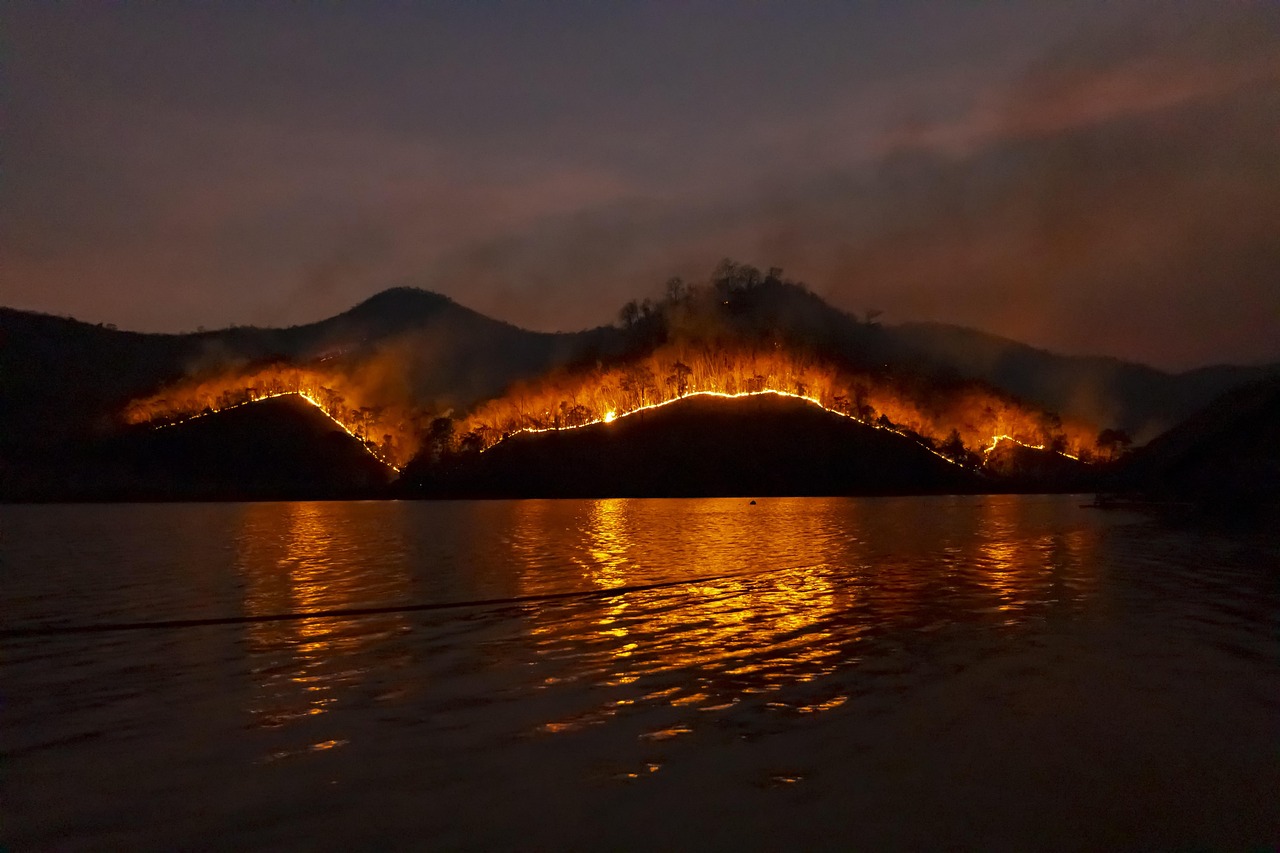
Former U.S. President Donald Trump sparked an intense debate by accusing Canada of "poisoning" the American air with smoke originating from nearly 1,000 forest fires in Canadian territory. During the final of the 2026 FIFA World Cup—an event hosted by the U.S., Canada, and Mexico—on June 19, 2026, Trump reportedly told Canadian Prime Minister Mark Carney: "You have to stop these fires so they don't come in and poison our air."
Trump even suggested imposing 50% tariffs on Canada and seeking sanctions or damages for alleged poor forest management, a claim met with disbelief by the scientific community and prompting threats of sanctions from Republican lawmakers.
Experts in climate and ecology have countered these statements. Michael Mann, a climatologist at the University of Pennsylvania, described Trump's stance as a form of "blaming the victim" and warned that policies accelerating fossil fuel production worsen the problem. Meanwhile, Marshall Burke from Stanford University explained that intense fires are not the product of Canadian inaction, but of global warming, which has made large fires more common.
Ecologist Lori Daniels from the University of British Columbia emphasized that it would be "physically impossible" to rake or clean the more than 1.2 billion acres of Canadian boreal forests, as Trump suggested. These forests, dominated by spruce trees and spongy soils usually soaked in water, become highly flammable under drought conditions.
Daniels stressed that the real solution involves addressing the climate crisis and supporting those who lose their homes and the firefighters risking their lives, calling it "insensitive" to blame another country while these disasters occur.
The crisis is not limited to Canada, which has already seen 8.1 million acres (3.3 million hectares) burn. In Europe, massive fires in France, Spain, and the United Kingdom have forced the evacuation of over 250,000 people. In the United States, forests in Washington, Oregon, Idaho, Colorado, and Utah are ablaze, generating smoke columns so extensive they could reach as far as Florida.
Spanish Prime Minister Pedro Sánchez summarized the situation by stating that "the entire Iberian Peninsula suffers the effects of the climate emergency in a very specific way." Experts agree that the world crossed a tipping point in the last decade, and the only way to mitigate these disasters is through decisive and global climate action.
A recent study on the fires in Maui, Hawaii, which occurred three years ago, reveals that biological, emotional, and social consequences persist long after the flames are extinguished. Research led by the University of Hawaii and the Yale School of Public Health indicates that exposure to wildfire smoke can increase the risk of hospitalization for respiratory and heart problems, even hundreds of kilometers away. The Maui study found that nearly half of adults still report symptoms of depression and post-traumatic stress, along with increased blood pressure and obesity levels in children and adolescents.
Despite the outlook, scientists emphasize that with long-term monitoring and the creation of "clean air centers", communities can better protect themselves. Alika Maunakea, a co-author of the study, highlighted that advances in reconstruction are real and must be recognized, demonstrating that human resilience is possible when adequate support is provided in housing, food security, and access to trusted healthcare.

Alfredo S. Quiroga
