


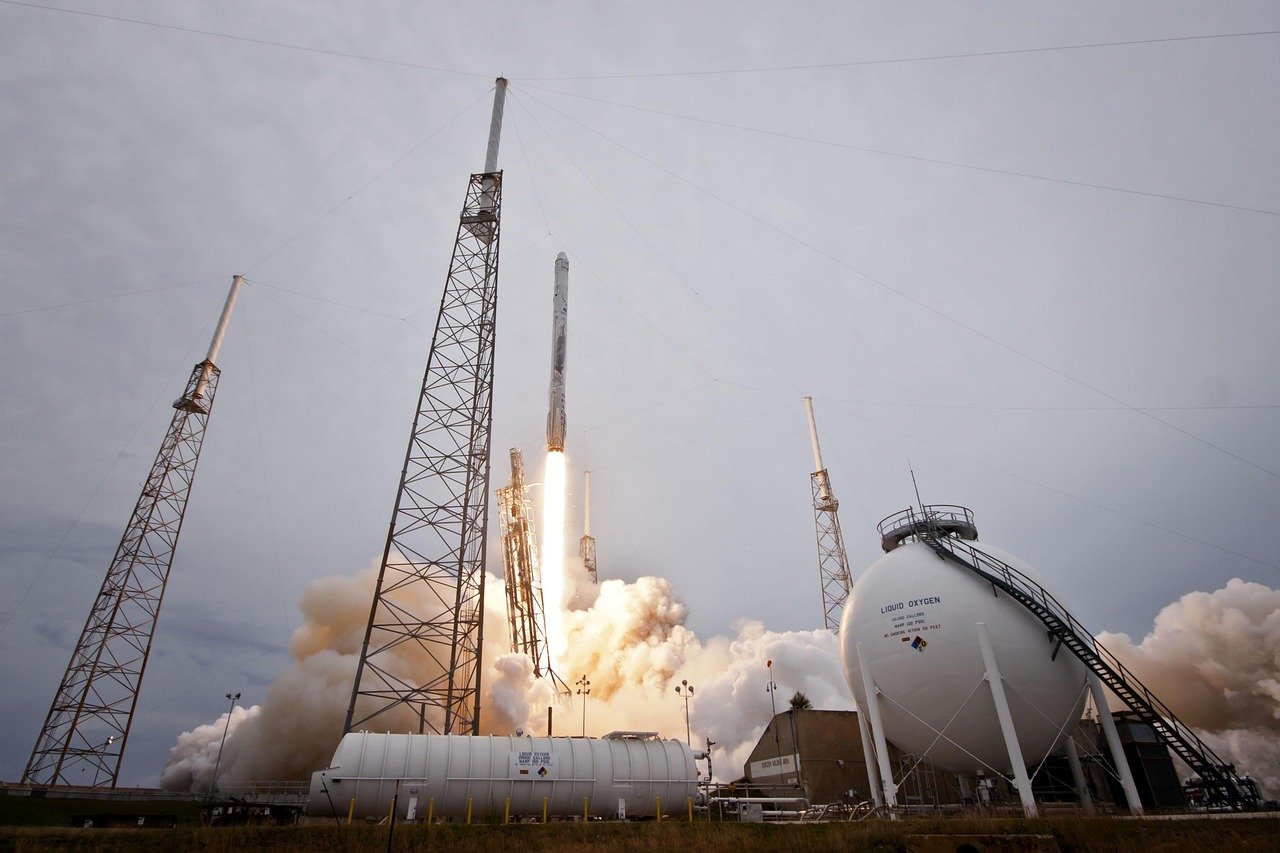
In a move that could reshape the global aerospace landscape, SpaceX, the company founded by billionaire Elon Musk, announced on August 26, 2026 its intention to build the largest spaceport in the world in the U.S. state of Louisiana. The news, first reported by the French newspaper Le Monde, marks a significant milestone in commercial space travel and promises to turn the Gulf Coast region into a high-tech hub.
A Massive Project on the Gulf of Mexico
According to Le Monde, the new facility would be located on Louisiana's coast, taking advantage of existing infrastructure and its proximity to the Gulf of Mexico. While SpaceX has not disclosed all technical details, the site is expected to surpass its current facilities in Boca Chica, Texas, and the historic Kennedy Space Center in Florida in both size and capacity.
The choice of Louisiana is no accident: the state offers logistical advantages, tax incentives, and privileged access to maritime routes, which would facilitate the transport of large rocket components. Additionally, the area boasts a skilled workforce thanks to its industrial and oil heritage.
Why Louisiana?
- Logistics: Deep-water ports for shipping rocket parts.
- Incentives: State-level tax breaks for aerospace companies.
- Workforce: Experienced engineers and technicians from the energy sector.
- Geography: Ideal launch trajectories over the Gulf.
What This Means for the Space Industry
This announcement reinforces SpaceX's strategy to expand its infrastructure to support frequent launches of its Starship rocket, designed for missions to the Moon, Mars, and beyond. A spaceport of this magnitude would allow the company to increase its launch cadence, reduce costs, and meet the growing demand for satellites and commercial missions.
In a context where the aerospace industry is experiencing a new era of competition—with players like Blue Origin, ULA, and government agencies such as NASA—SpaceX's bet on Louisiana could redefine the map of orbital launches. For international observers, this is a clear signal that the United States is doubling down on private space exploration.
Local Impact and Expectations
Louisiana authorities have welcomed the news with enthusiasm, as the project could generate thousands of direct and indirect jobs, boost the local economy, and position the state as a reference in the new space economy. However, questions also arise about the environmental impact and coexistence with coastal communities, issues the company will need to address in the coming months.
SpaceX has not given concrete dates for the start of construction or operations, but estimates suggest the project could take several years. Meanwhile, the company continues its expansion plans in Texas and Florida, and the development of new generations of reusable rockets.
A Step Toward a Multiplanetary Future
This announcement adds to a series of recent SpaceX milestones, including successful crewed missions and the massive deployment of Starlink satellites, which aim to bring high-speed internet to the entire planet. With this new spaceport, Elon Musk's company takes another step toward its goal of making humanity a multiplanetary species.
For now, the world watches as Louisiana prepares to become the launchpad for the next chapter in space exploration.