


06/07/2026 16:47 - Tecnologia
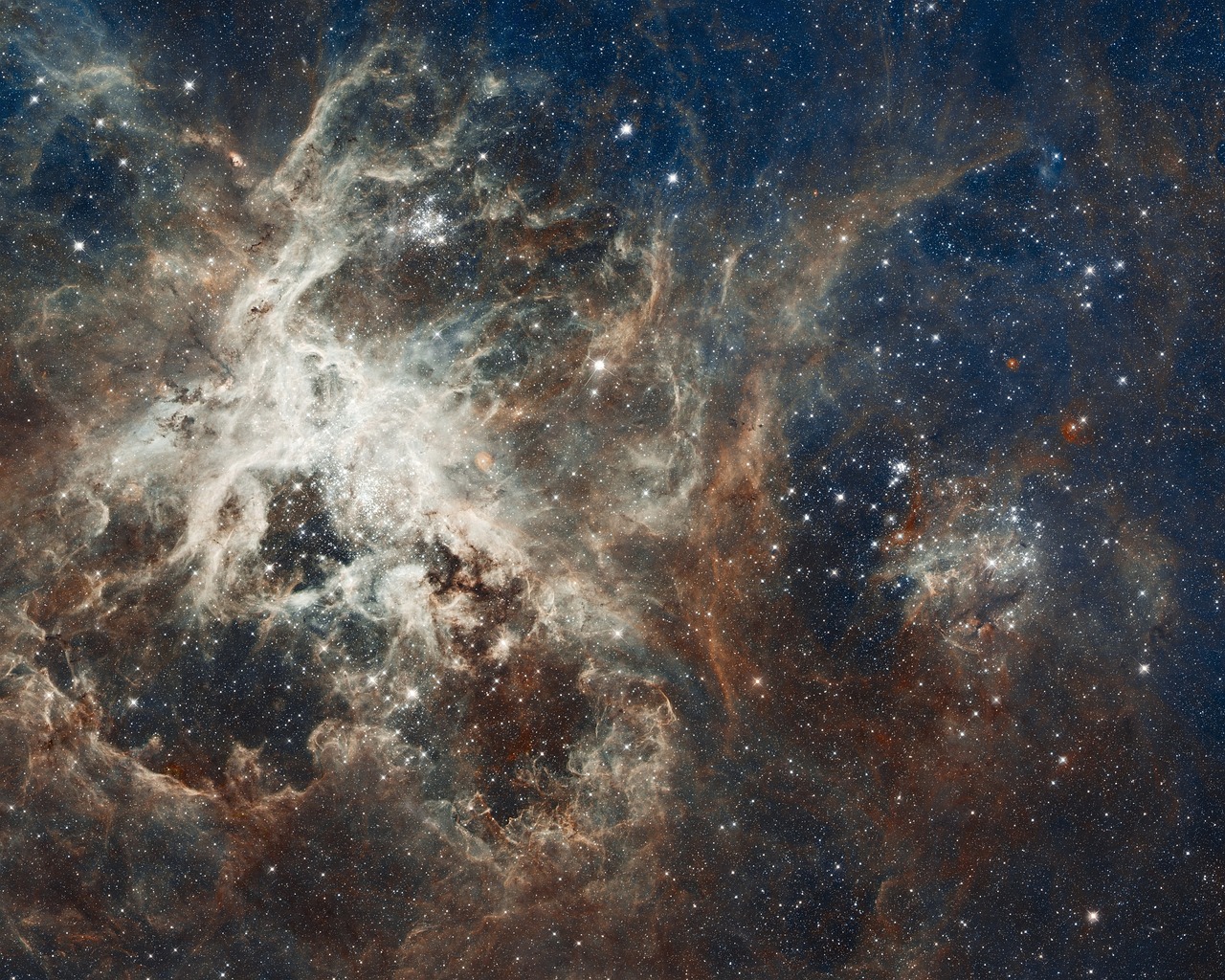
The universe holds secrets that humanity is just beginning to grasp. Thanks to space technology, we have taken a giant leap back in time.
An international team of scientists, led by the University of California, Santa Barbara (USA), has discovered 31 of the oldest quasars ever found. From this group, two stand out as the most primitive ever observed in cosmic history. These objects radiated the light of a trillion suns when the universe was barely 670 million years old. The findings, published in the journal 'Astronomy & Astrophysics', represent an extraordinary breakthrough in modern astronomy.
To understand the magnitude of this discovery, it is key to know that quasars are among the brightest and most energetic objects in the universe. They are powered by supermassive black holes that devour matter at the centers of galaxies. Their extreme luminosity makes them visible across vast cosmic distances, acting as beacons that illuminate the distant past.
Scientists use 'redshift' to measure the age and distance of an object. Due to the expansion of space-time, light from more distant places stretches toward longer (infrared) wavelengths. A redshift of 7 takes us back to when the universe was only 750 million years old, less than 6% of its current age.
Finding these primordial objects from Earth is nearly impossible. The light from these quasars gets confused with Earth's atmosphere and nearby stars. This is where the Euclid space telescope comes in, marking a true turning point. According to the study's lead author, Daming Yang, Euclid allows for a much more efficient search across vast areas of the sky to capture much fainter light.
Of the 31 new quasars, 14 have a redshift of 7 or higher. The two oldest possess redshifts of 7.69 and 7.77, setting a new record. Both are located just over 13 billion light-years away and emerged during the universe's first 670 million years.
The discovery relied not only on advanced telescopes but also on new machine learning methods that allowed researchers to examine tens of millions of sources and distinguish real quasars from impostors. The team, which also developed the PypeIt software to process data from the Keck telescopes, already has new targets.
The next step is to expand the frontier to find the first quasar with a redshift greater than 8, placing it in the universe's first 630 million years. To achieve this, they will use the James Webb Space Telescope and the Atacama Large Millimeter Array (ALMA) to piece together a quasar chronicle of the cosmos' first billion years.
Source: Heraldo.es

Alfredo S. Quiroga
