


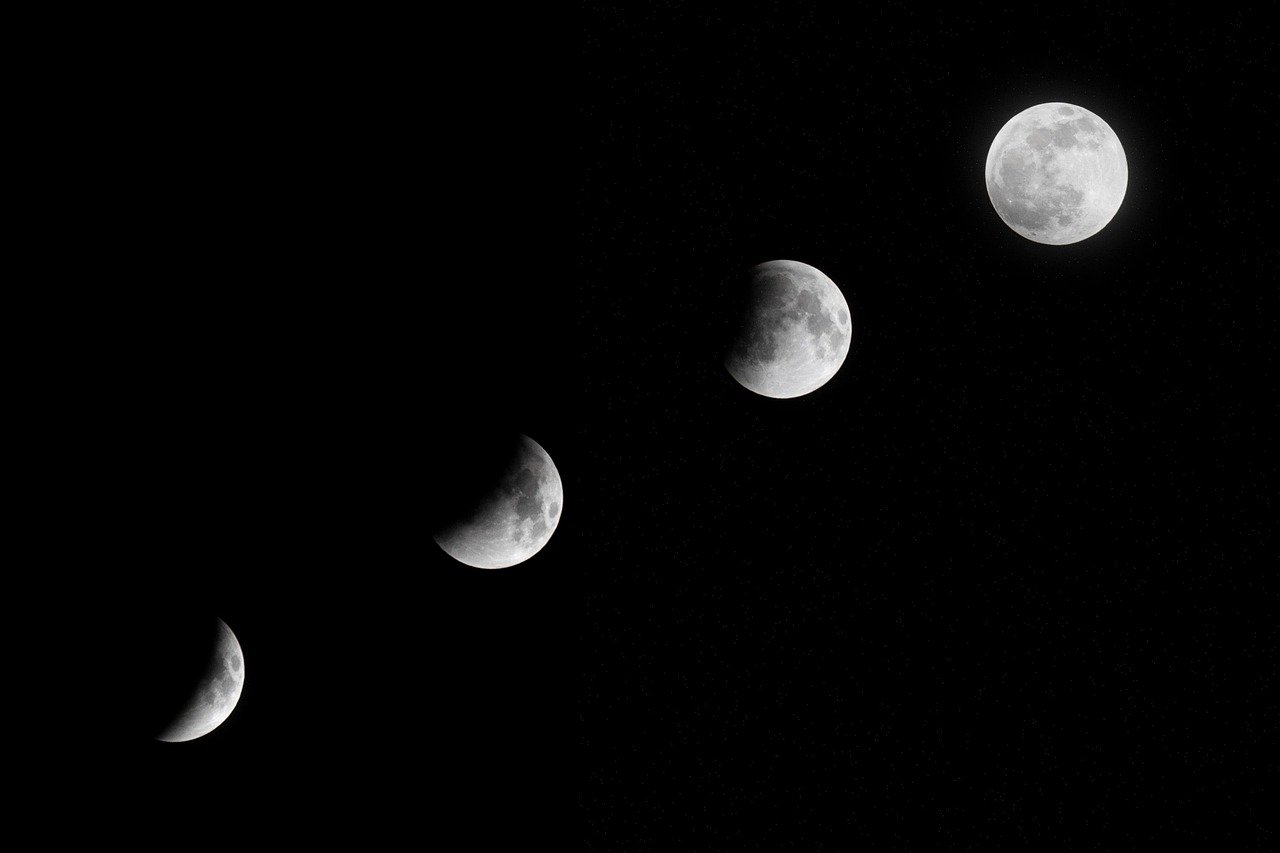
An Unmissable Celestial Spectacle
On the night of Thursday, August 27 and the early hours of Friday, August 28, the sky will offer one of the most captivating phenomena of the year: a partial lunar eclipse that will cover up to 96% of the lunar surface, painting it in a characteristic coppery red hue, popularly known as the Blood Moon.
This event, caused by the alignment of the Earth, Moon, and Sun, will be fully visible from North and South America, as well as parts of Europe, Africa, and the Middle East. According to NASA, more than 3.3 billion people will be able to observe at least one phase of the eclipse, provided the sky is clear.
Key Times in Argentina (UTC-3)
- 10:23 PM (Aug 27): Penumbral phase begins (barely perceptible).
- 11:33 PM (Aug 27): Partial eclipse starts; the umbra becomes visible.
- 1:12 AM (Aug 28): Maximum eclipse, with 96% of the Moon covered.
- 2:13 AM to 2:50 AM: Progressive end of the partial phase.
- 4:01 AM: Event concludes completely.
In San Juan, astronomer Eric González specified that the umbral magnitude will be 0.9299, meaning a small 'fingernail' of light will remain. The phenomenon can be seen with the naked eye from anywhere in the province, even from your backyard.
Why Does the Moon Turn Red?
During the eclipse, Earth's atmosphere acts as a filter: it scatters blue and violet wavelengths, allowing only red and orange tones to pass through and refract onto the Moon. 'It's as if all the sunrises and sunsets on Earth were projected onto the Moon,' explains NASA. The intensity of the color depends on the amount of dust and particles in the atmosphere.
Observation Tips
- No eye protection needed: Unlike solar eclipses, looking at the eclipsed Moon is completely safe.
- Find a location away from light pollution for a better view.
- Binoculars or telescopes can enhance the experience, but are not essential.
- Check the weather forecast: cloud cover can ruin the observation.
What's Next?
This is the second lunar eclipse of the year and the fourth eclipse overall. The next total lunar eclipse will occur only on New Year's Eve 2028, with Asia and Australia as the main viewers. For the Americas, we'll have to wait until 2029 for another total eclipse.
Sources: La Nación | Infobae | El Litoral | 0264 Noticias | Cadena 3